

Humans are social creatures, and as social creatures we create systems that separate us by our differences. IT professionals are known as such because they are experts at understanding and working with computers and information systems, just as Olympic gymnasts are regarded for their ability to compete in gymnastic events. Our differences are our identifiers. In fact, humans put labels on things to better identify them using even the most miniscule differences.
Global Tech Solutions Blog
Facebook’s servers process a massive amount of data each day… which only makes sense, considering their 2.4 billion active users. Unfortunately, the social network has had some issues over the past few years with data privacy. Whether you use Facebook as a social networking tool for your personal life, your business, or both, you need to know how to best take control of your own privacy on the platform.
Wait! If you haven’t read part one of our Facebook privacy blog yet, you may want to do that before reading this one. If you’re ready, we’ll be taking an in-depth look at your Facebook settings to make sure that your account and its data are as secure as possible. If we’re being honest, protecting this kind of data hasn’t seemed to be one of the platform’s strong suits - and user privacy has been the star of many lists of concern.
Two billion users strong, Facebook is one of the Internet’s most popular websites… which has frequently put the tech giant in the spotlight when it comes to how secure the data you’ve entrusted to them (in addition to what they’ve collected) really is. Today, we’ll discuss how you can access the information Facebook has on you.
Data privacy is a huge issue right now, and with so many organizations possessing individual information, the issue isn’t going to be going away. Some of the biggest and most reputable organizations in business today have been breached in the past several years and it has put a new onus on individual data protection. Let's take a look at individual data privacy and what can be done to protect yourself online.
Passwords are hard to remember - there’s no denying that. However, there is also no denying how important it is to use different ones for each account, all sufficiently complex, and all the rest. The point is, a lot of people use bad password practices because (to be frank) good password practices are too intimidating. There has to be some kind of acceptable middle ground… right?
Data privacy is a serious issue in the world today, and the European Union’s General Data Protection Regulation, or GDPR, is perhaps the greatest example of how these issues are being addressed. Let’s take a look at how GDPR has shaped the computing world over the past year, as well as how events have exposed certain considerations regarding individual data privacy.
Do you ever think of your business as too small of a target to matter to hackers? Some organizations actually do believe this, and that notion is effectively a trap. The thing that all businesses need to keep in mind is that all organizations, regardless of which industry they fall into, as all companies have data that’s valuable to hackers. We’re here to prove it and ensure you know the best way to protect your data.
Does your organization take network security as seriously as it should? It’s easy to forget with today’s advanced security offerings that the online realm is a dangerous place, but the truth of the matter is that you can’t risk your business’ security--not even for a moment. We’ll walk you through how your organization can minimize threats to security, as well as give you a primer regarding what’s at stake.
With over 90 percent of people in the United States feeling as though their data is out of their hands, it should come as little surprise that many are looking towards the European Union’s General Data Protection Regulation as inspiration. However, how close is the United States to passing this kind of legislation… and how will smaller businesses fare if (or when) some is passed?
You hear about encryption being used all the time, almost to the point of it being synonymous with security, but what does it really mean to have encryption on your business’ data and devices? We’ll walk you through how encryption can help you in your day-to-day struggle to secure the integrity of your organization’s communication and infrastructure.
What would you do if a stranger claimed to have compromising webcam footage of you and threatened to share it with your contacts? A new, very convincing email scam is making some users very nervous.
Someday, you’re going to encounter a situation where you absolutely need Wi-Fi and the only option will be a public connection. This becomes rather problematic, as a public Wi-Fi connection is far from secure for business purposes. A method to maximize productivity without compromising security is needed for every business that has employees working out of the office, but what’s the best way to do it?
Spyware, like other malware, is a problem for any organization. Since your business generates, collects, and uses considerable amounts of data, there are plenty of organizations that want to get their hands on it. You spend so much time and money protecting your data against threats on the Internet, but what if the spyware were to just come standard on the computer you just bought?
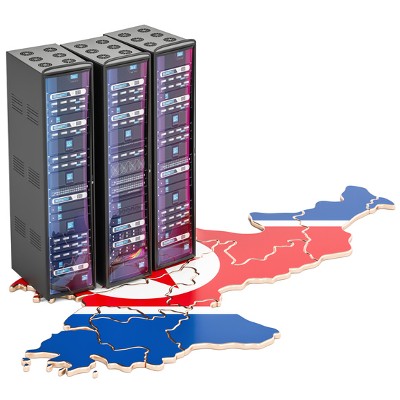
In a statement given by Tom Bossert, the homeland security adviser to the White House, blame for the WannaCry attacks leveraged from May 12th to the 15th in 2017 was attributed to the Democratic People’s Republic of Korea. This assertion is in line with the conclusions that New Zealand, Australia, Canada, and Japan have come to, according to Bossert.
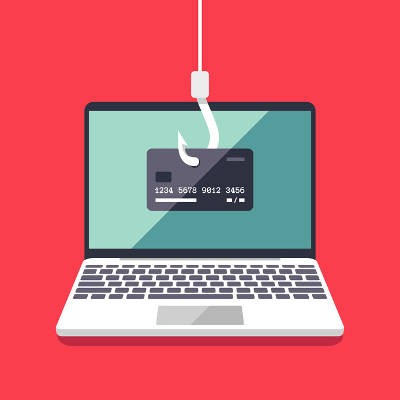
While many might see having a credit card stolen as identity theft, this is an oversimplification that can prove dangerous. While credit card theft can be an element of identity theft, equating the two means that other forms of identity theft are overlooked. In today’s blog, we’ll go over why identity theft and credit card theft aren’t exactly the same thing, and what you can do to help keep your business safe from damage.
Google is taking steps to protect the data of a small group of its users who run the highest risk of experiencing a data breach or hack. This new service, the Advance Protection Program, shows promise in protecting the information that these select few can access.
There are many organizations in the world that simply can’t have cybercriminals and hackers interfering with their data. One of these organizations, CERN (whose acronym translates to the European Laboratory for Particle Physics) has far too powerful of a computer grid to allow hackers to access it. To keep it safe, CERN has deployed what may be the future of cybersecurity: artificial intelligence.
In the last few months, there have been several high-profile data security breaches that resulted in the theft of millions upon millions of non-public information records. Though much of the focus in the aftermath of the breaches was on personal identity theft and prevention, it’s important to keep in mind that not all the stolen data records target individuals. Business entities are also at risk. Vendors and partners that you do business with regularly will probably have record of your company’s non-public information, payment information, or tax ID number.
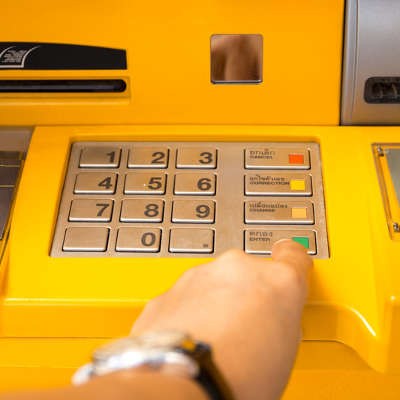
ATMs are, surprisingly enough, not the most secure pieces of technology out there, though there are efforts to improve security by taking advantage of mobile devices. Granted, this won’t be enough to protect against the considerable vulnerabilities in ATMs. In order to maximize security and minimize the amount of damage done by vulnerabilities, the user needs to understand how to protect themselves while using ATMs.